
 |
| Samsung Galaxy S25+ review |
Introduction
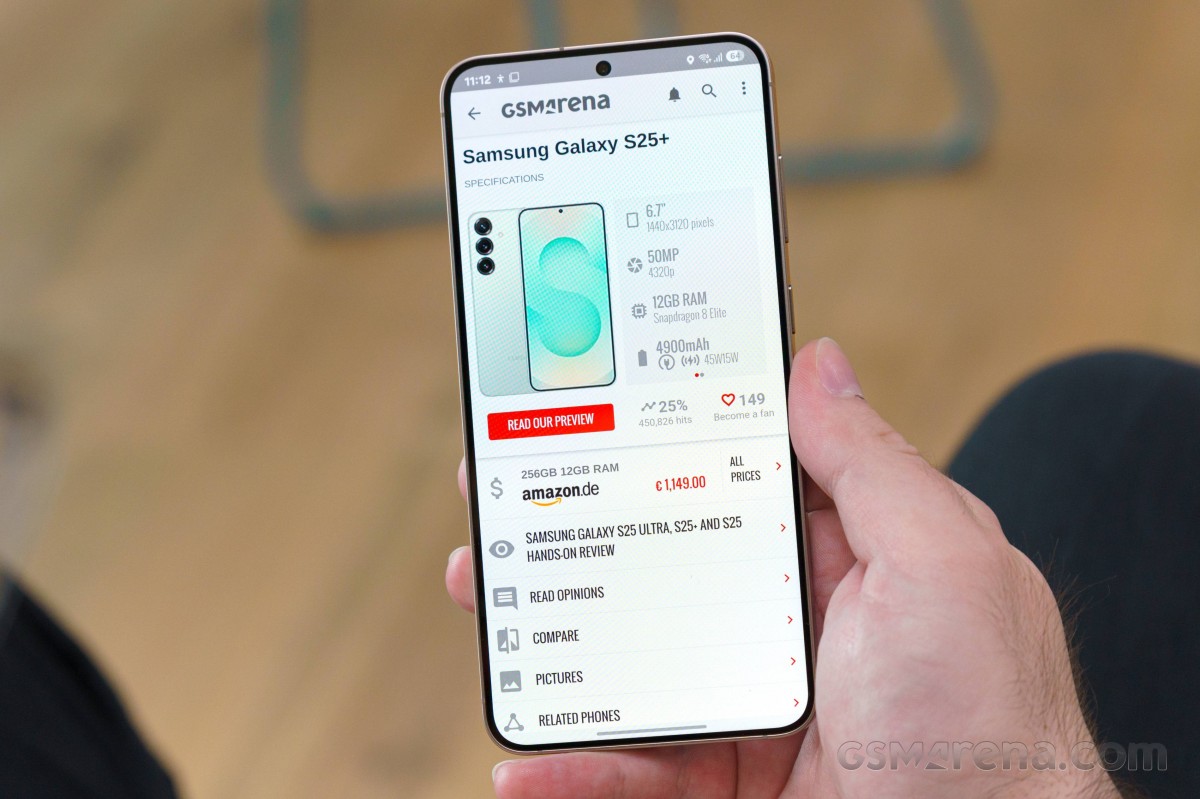
One does not simply go and buy the Galaxy S25+. You need to specifically want the in-between model, the version that didn't become an Ultra and instead turned out as an enlarged Galaxy S25. And this year the reason for getting the Plus model has a name and that's the Snapdragon 8 Elite chip.
The chipset is an overclocked "for Galaxy" version and it is indeed the single substantial upgrade since the Galaxy S24+. It allows for over 30% of performance increase across the board, Wi-Fi 7 connectivity and Bluetooth 5.4 support.

The rest of the Galaxy S25+ is identical to the Galaxy S24+, starting with the glass design with aluminum chassis and IP68 rating. Then there is the 6.7-inch Dynamic AMOLED 2X screen with 1440p resolution and 120Hz dynamic refresh rate.
All four cameras are a match to the Galaxy S24+'s - a 50MP primary, a 10MP 3x telephoto and a 12MP ultrawide cameras on the back, plus a 12MP selfie imager at the front.

The battery and charging department got a subtle update. The battery capacity is still 4,900mAh, and the charging ratings are unchanged - 45W wired and 15W wireless charging, as well as 4.5W reverse wireless option. The wireless charging capabilities have been expanded to be Qi2.1 ready.
There are many software novelties, including AI ones, thanks to One UI 7 and Android 15. But those are bound to make it to the Galaxy S24 series, too.
Samsung Galaxy S25+ specs at a glance:
- Body: 158.4x75.8x7.3mm, 190g; Glass front (Gorilla Glass Victus 2), glass back (Gorilla Glass Victus 2), aluminum frame; IP68 dust/water resistant (up to 1.5m for 30 min), Armor Aluminum 2 frame.
- Display: 6.70" Dynamic LTPO AMOLED 2X, 120Hz, HDR10+, 2600 nits (peak), 1440x3120px resolution, 19.5:9 aspect ratio, 513ppi; Always-on display.
- Chipset: Qualcomm SM8750-AB Snapdragon 8 Elite (3 nm): Octa-core (2x4.47 GHz Oryon V2 Phoenix L + 6x3.53 GHz Oryon V2 Phoenix M); Adreno 830.
- Memory: 256GB 12GB RAM, 512GB 12GB RAM; UFS 4.0.
- OS/Software: Android 15, up to 7 major Android upgrades, One UI 7.
- Rear camera: Wide (main): 50 MP, f/1.8, 24mm, 1/1.56", 1.0µm, dual pixel PDAF, OIS; Telephoto: 10 MP, f/2.4, 67mm, 1/3.94", 1.0µm, PDAF, OIS, 3x optical zoom; Ultra wide angle: 12 MP, f/2.2, 13mm, 120˚, 1/2.55" 1.4µm, Super Steady video.
- Front camera: 12 MP, f/2.2, 26mm (wide), 1/3.2", 1.12µm, dual pixel PDAF.
- Video capture: Rear camera: 8K@24/30fps, 4K@30/60fps, 1080p@30/60/240fps, 10-bit HDR, HDR10+, stereo sound rec., gyro-EIS; Front camera: 4K@30/60fps, 1080p@30fps.
- Battery: 4900mAh; 45W wired, PD3.0, 65% in 30 min, 15W wireless (Qi2.1), 4.5W reverse wireless.
- Connectivity: 5G; eSIM; Wi-Fi 7; BT 5.4; NFC.
- Misc: Fingerprint reader (under display, ultrasonic); stereo speakers; Samsung DeX, Samsung Wireless DeX (desktop experience support), Ultra Wideband (UWB) support, Circle to Search.
We think the most powerful chip on the market will give the Galaxy S25+ a much bigger fighting chance than ever before. It is a more balanced flagship with a premium screen and great cameras. It is also not as large as the Ultra and it's more feature-rich than the small Galaxy S25. But we also hoped to see enhanced durability and at least better ultrawide camera this year, things that were unfortunately pushed for at least one year down the road yet again.
Unboxing the Galaxy S25+
The Galaxy S25+ ships in a thin black box, which contains a SIM ejector and a USB-C cable.

The bundled cable is model DN980 with a 3A or 25W rating. This means it will not be enough to supply 45W charge if you have a compatible 45W or higher USB-PD adapter at home. You either need to shop for a new 5A-rated cable, or a combo package with a charger and a cable.
Design, build quality, handling
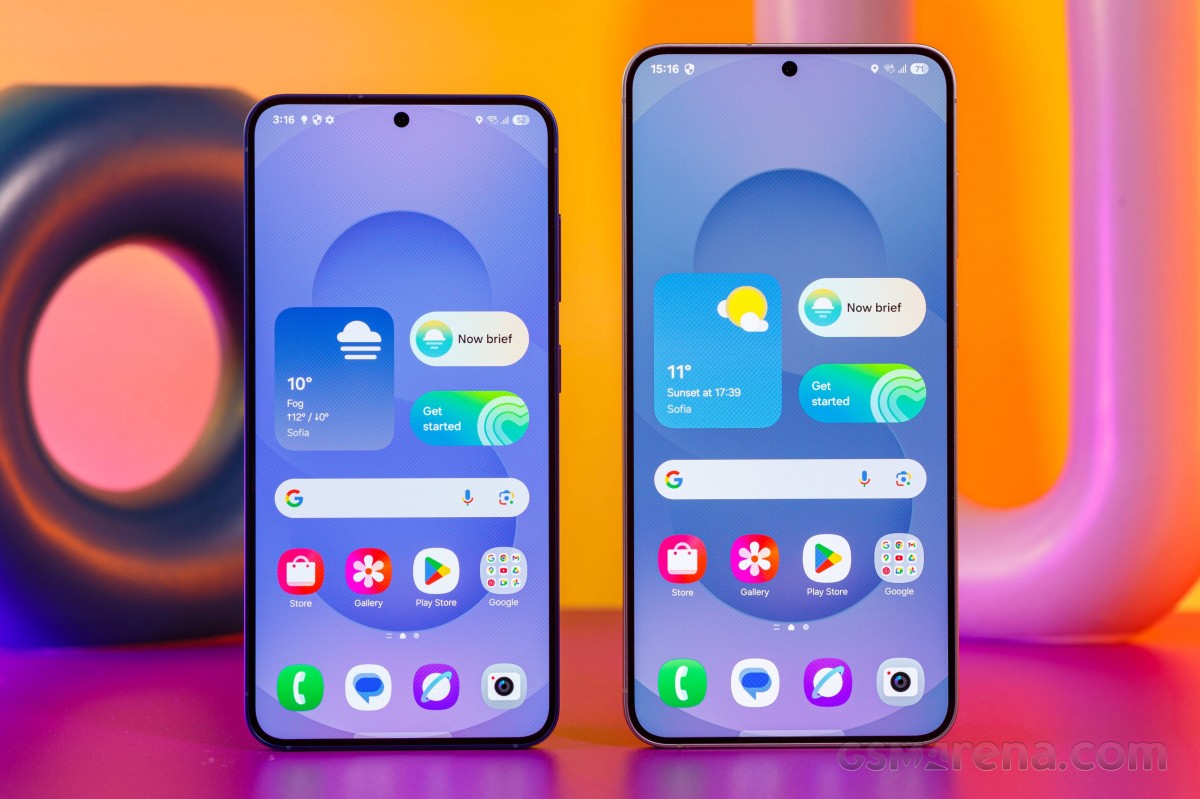
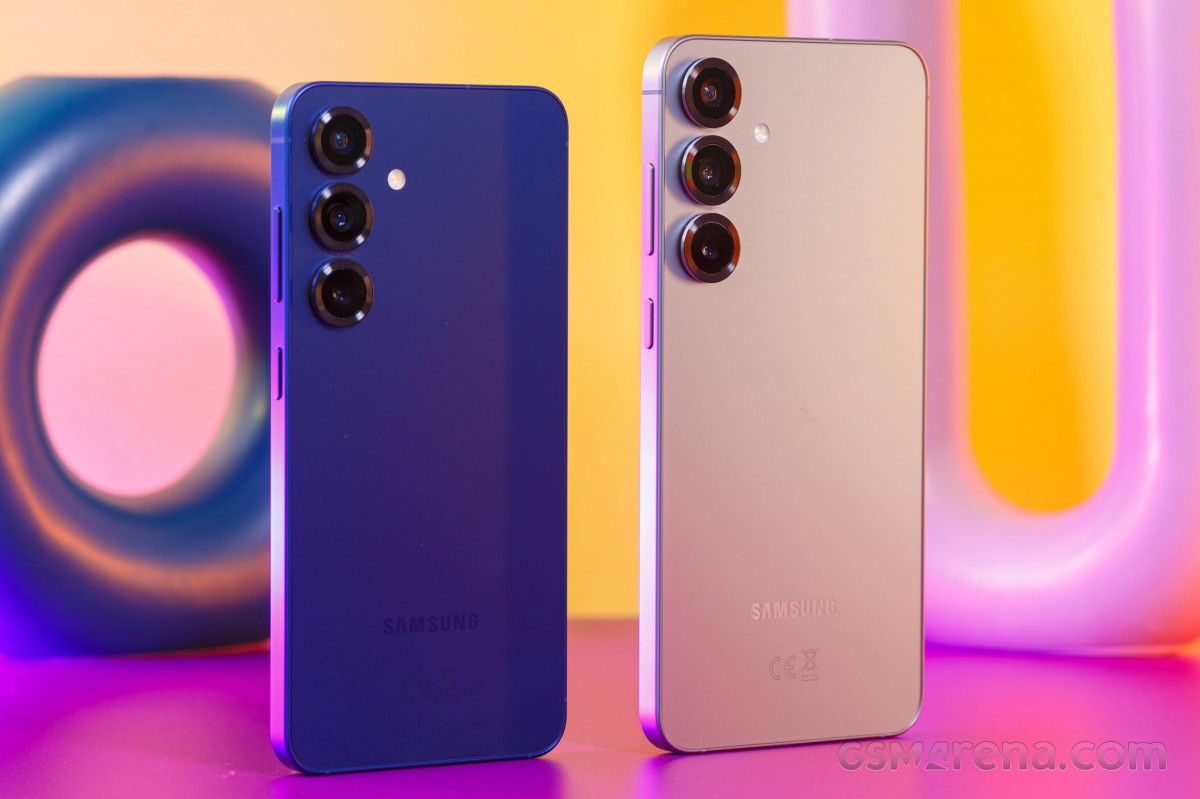
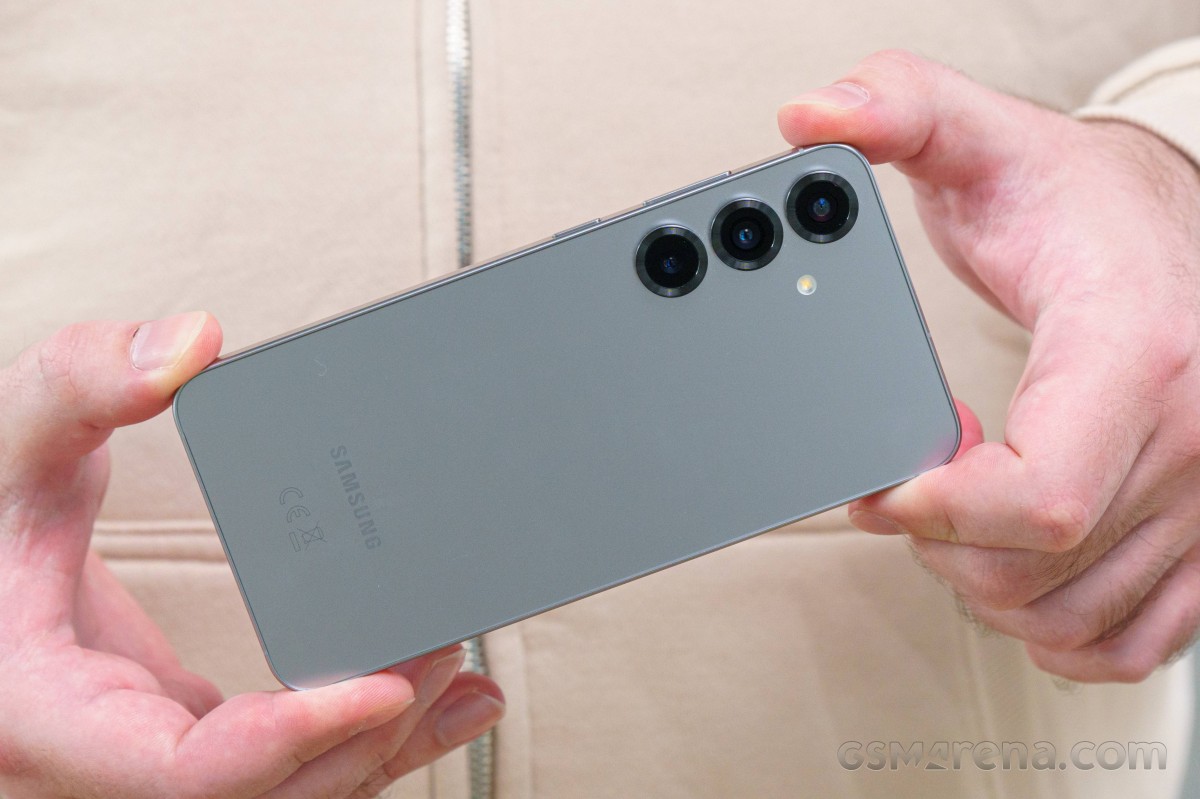
Yes, the Galaxy S25+ and Galaxy S24+ have identical designs. In fact, except for the new colors and the 0.4mm reduction in thinkness, there is not a single obvious change to the exterior.
The Galaxy S25+ has two flat Gorilla Glass Victus 2 panels and uses the second-generation Armor Aluminum frame, also flat. The lesser S25 models are not getting the anti-reflective Gorilla Armor glass for a second year in a row, while the S25 Ultra is already using Gen 2.
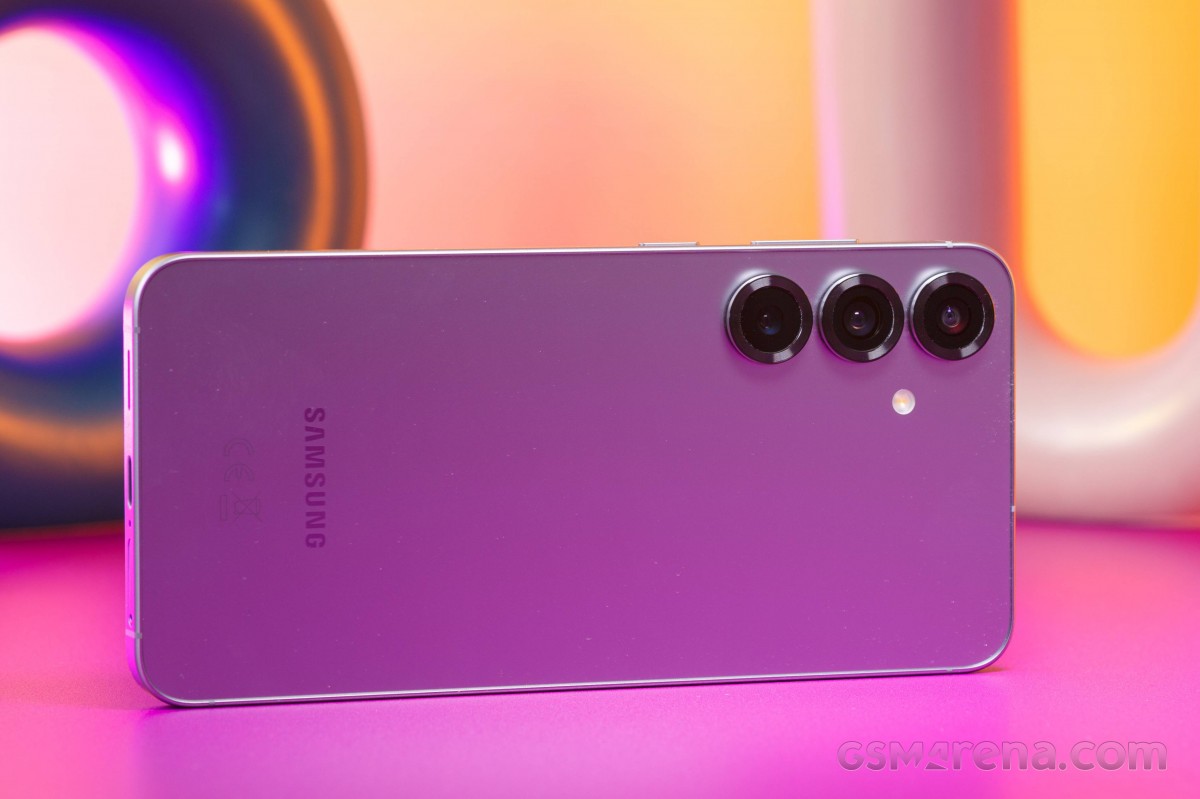
The Galaxy S24+ is IP68-rated for dust and water resistance, and Samsung is content with covering the rating's bare minimum standard for immersion in 1.5-deep water for 30 minutes.
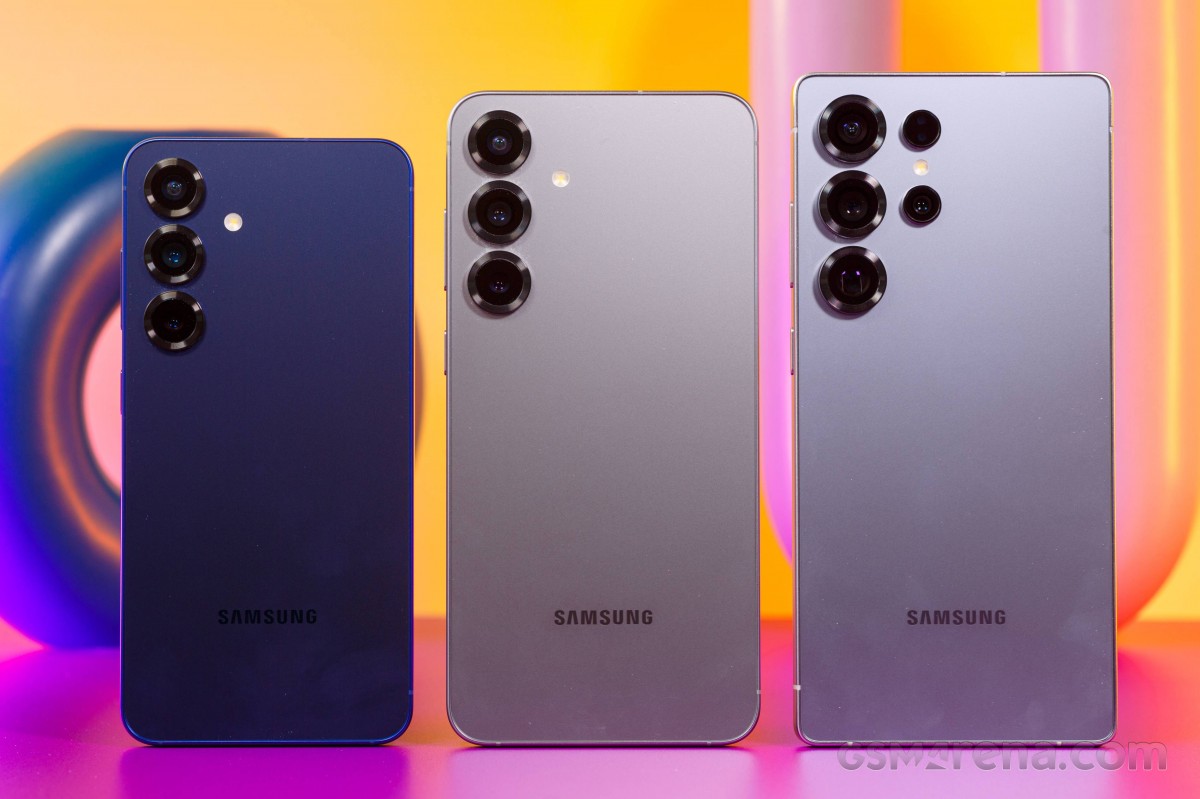 The Galaxy S25 trio
Samsung's classic design has been well received and appreciated so there is nothing bad about keeping it unchanged. It is a clean no-nonsense design with minimum interruptions and no large camera housing. Now that the Galaxy S25 Ultra adopted the same flat design, the Plus model can be safely described as cool as the Ultra, but a bit more compact.
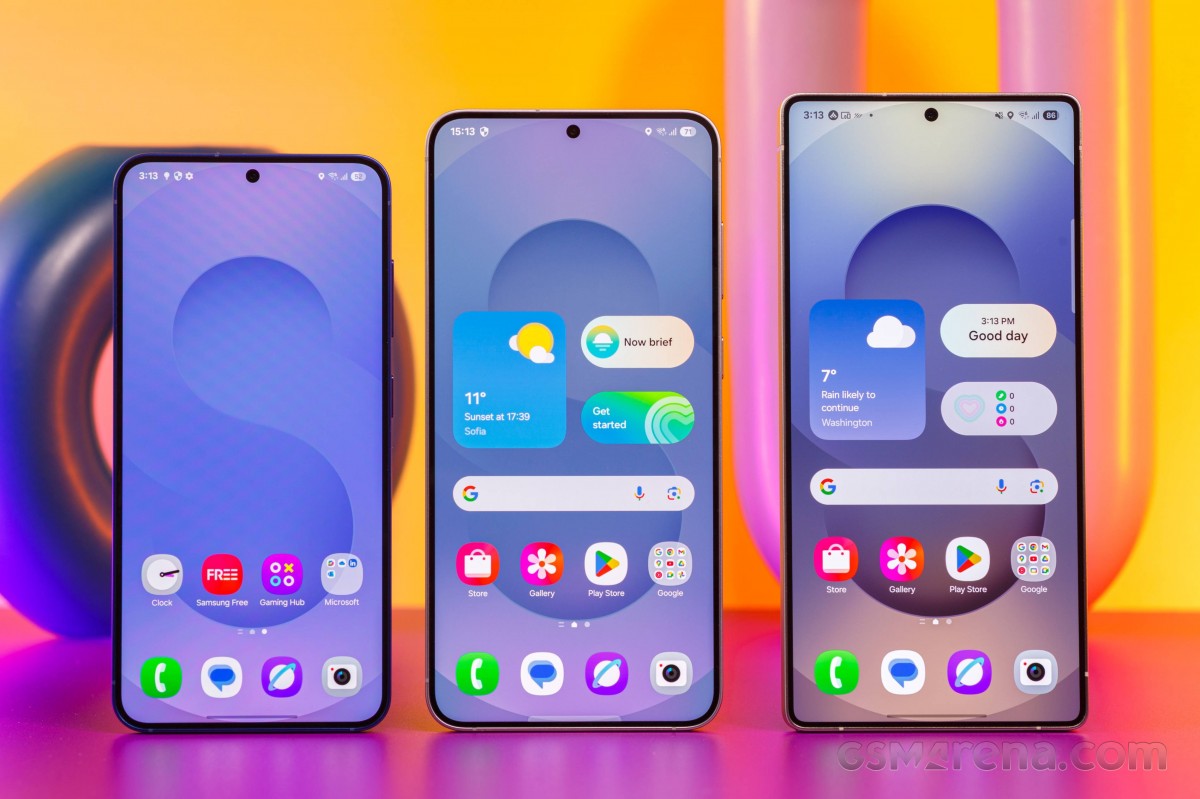 The Galaxy S25 trio
The Galaxy S25+ is 0.4mm thinner than the Galaxy S24+ and 7 grams lighter, which is great. The phone became more powerful, yet thinner and lighter.
But the lack of obvious change can be off-putting to some users and we do agree with that sentiment to an extent.
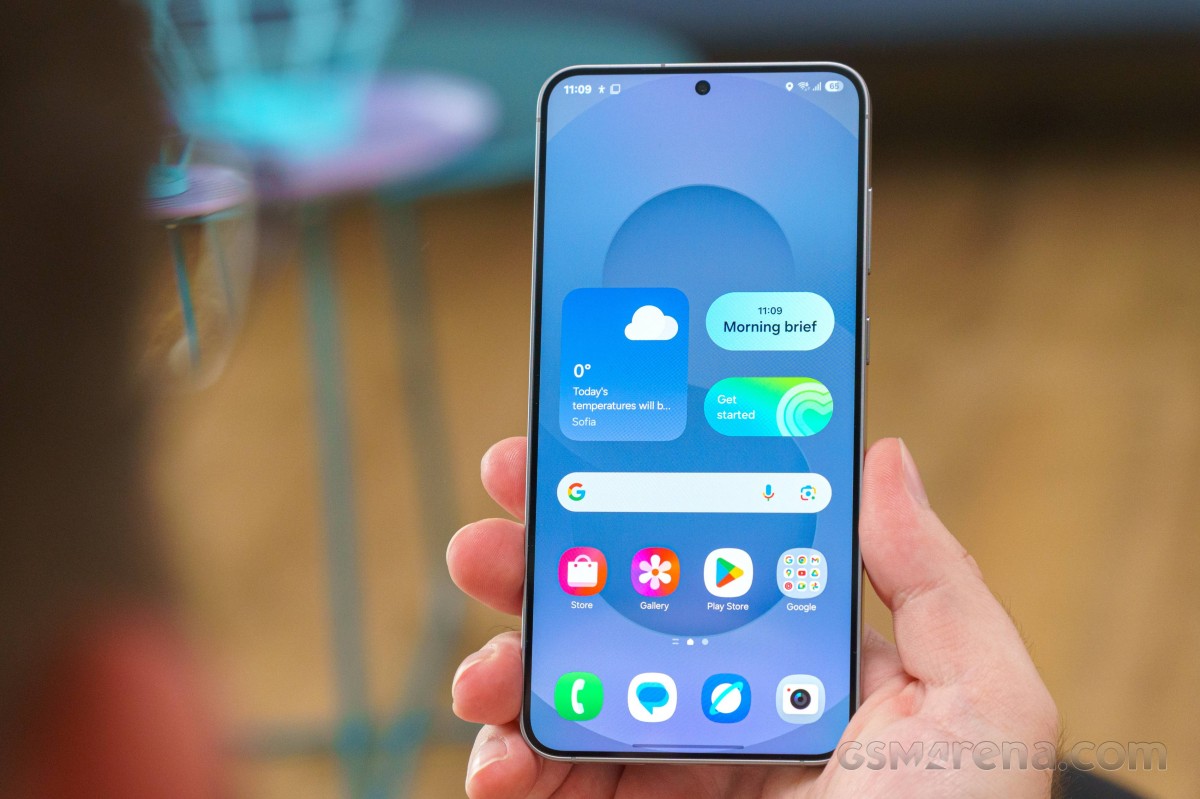
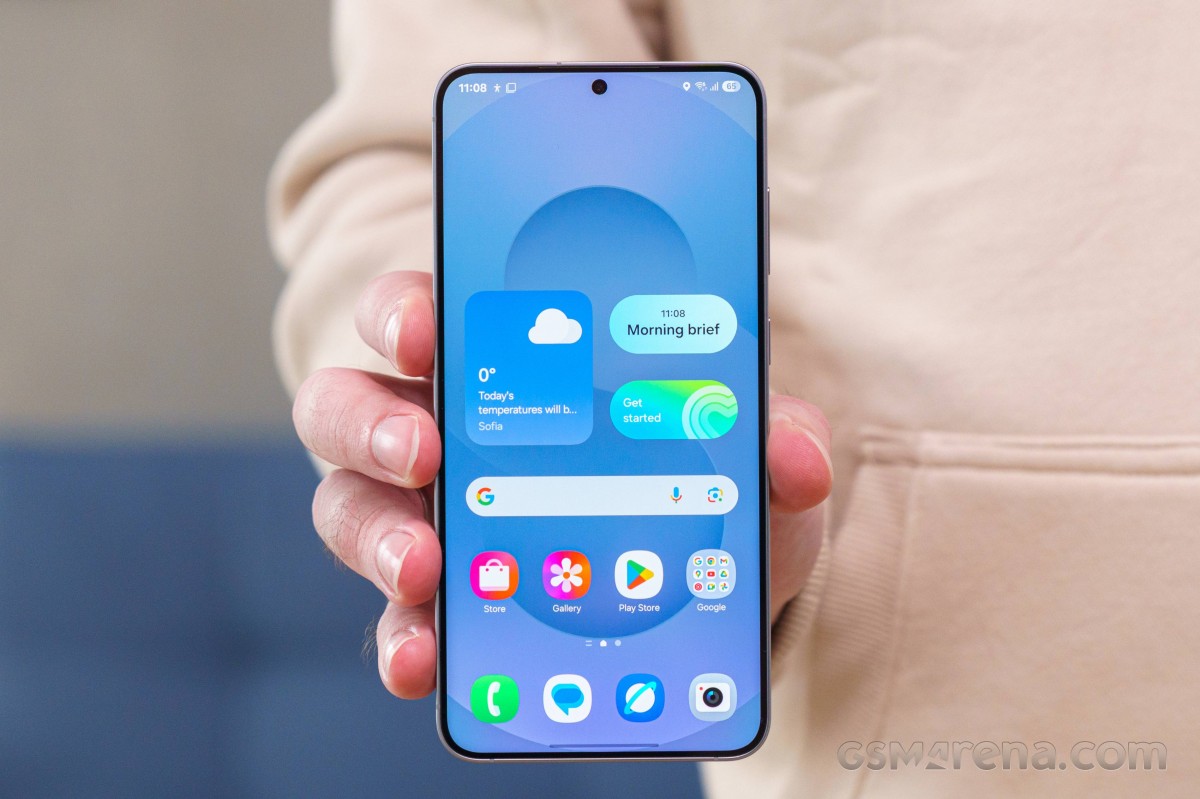
The 6.7-inch 1440p Dynamic AMOLED 2X screen is at the front, featuring nicely thin and even bezels.
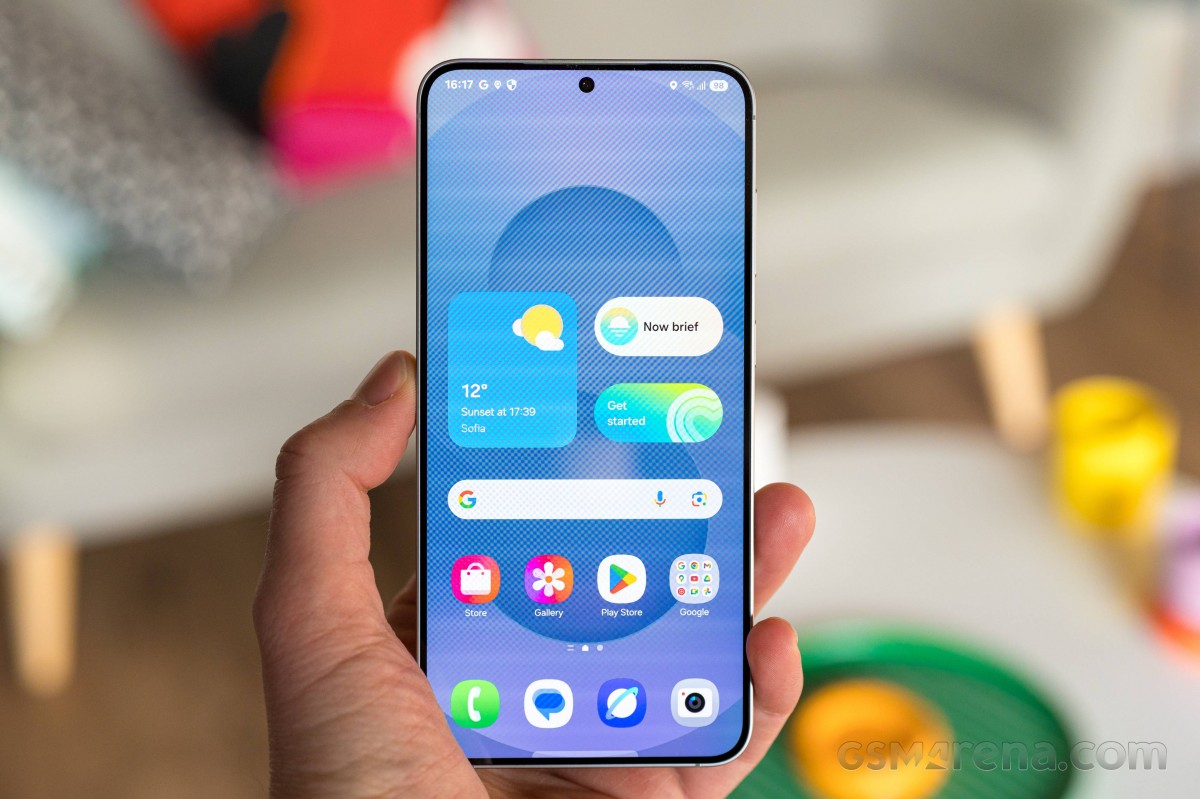
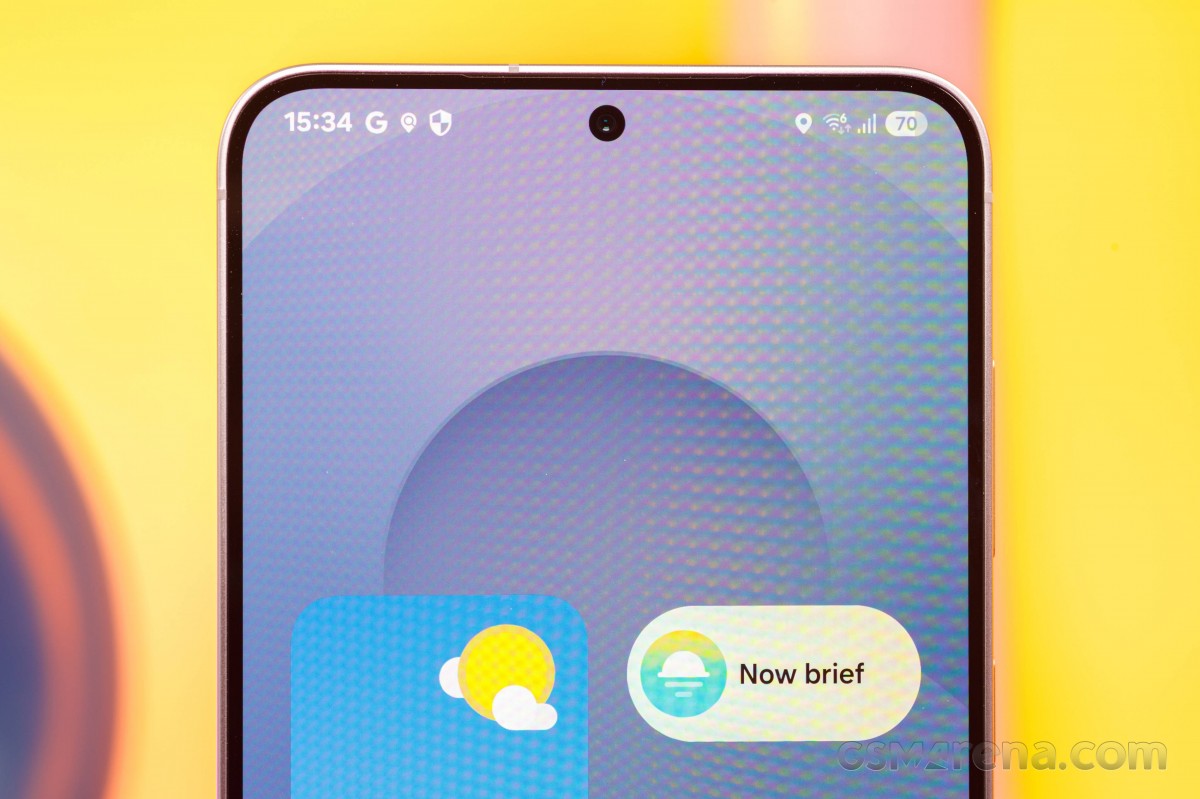
The 12MP selfie camera is sitting in a small perforation centered around the top part of the screen.
There is an under-display ultrasonic fingerprint sensor, which is a nice treat available across all Galaxy S phones. It works very well, is fast and reliable, and does not need illumination as optical ones.
The earpiece is so thin, almost invisible, but it is there and it appears nicely loud. It also doubles as a stereo speaker, as usual.
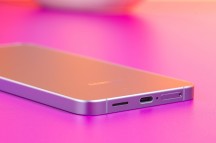
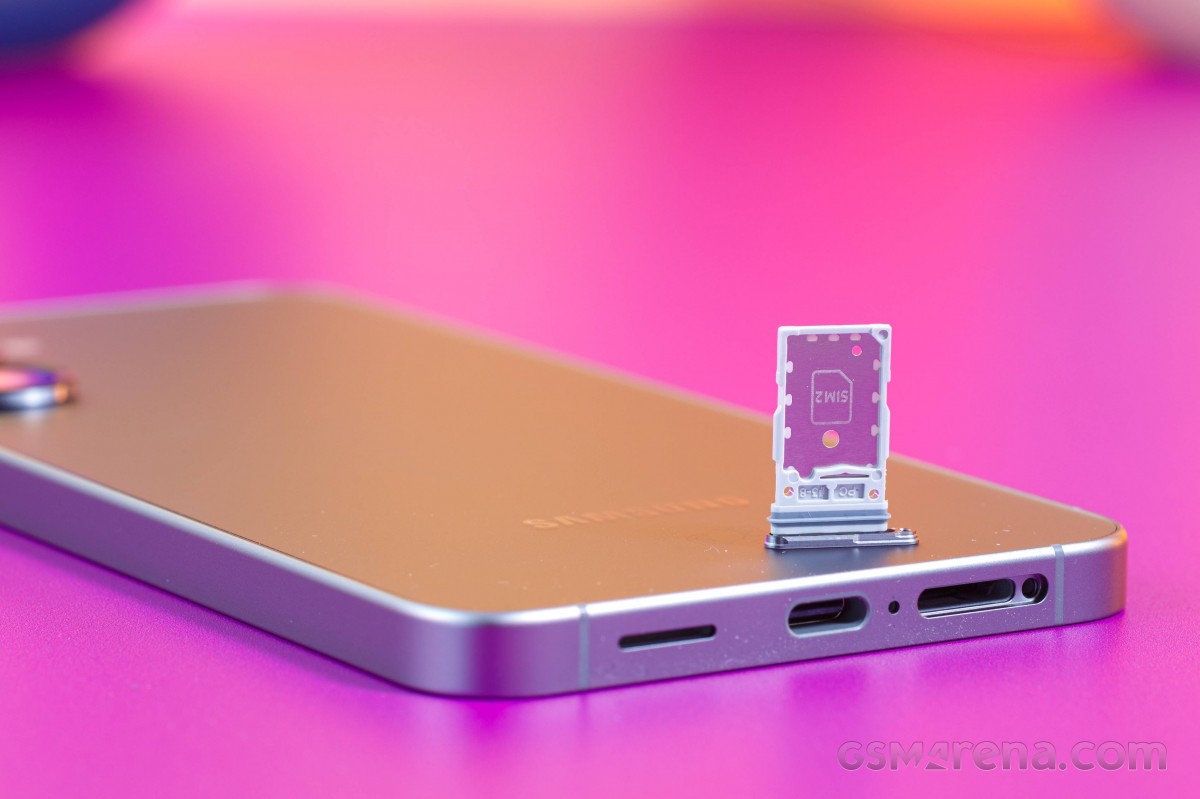
The other speaker is at the bottom of the Galaxy S25+, close to the USB-C port, the mouthpiece and the dual-SIM tray (EU version).
The Galaxy S25+ supports two nano-SIMs and two eSIMs, and you can use a maximum of two SIM cards, no matter of their type. The standard US version accepts only one physical SIM card (plus two eSIMs).

Samsung Galaxy S25+
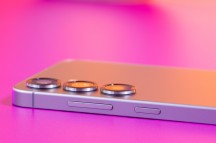
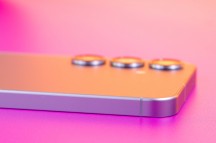
The back of the Galaxy S25+ is all matte, just like the frame. There are three standalone rings - one for each camera, and the LED flash. Even of the metal rings around the lenses are merely glued on top as decoration, we still appreciate the flat back design without a gigantic camera island.
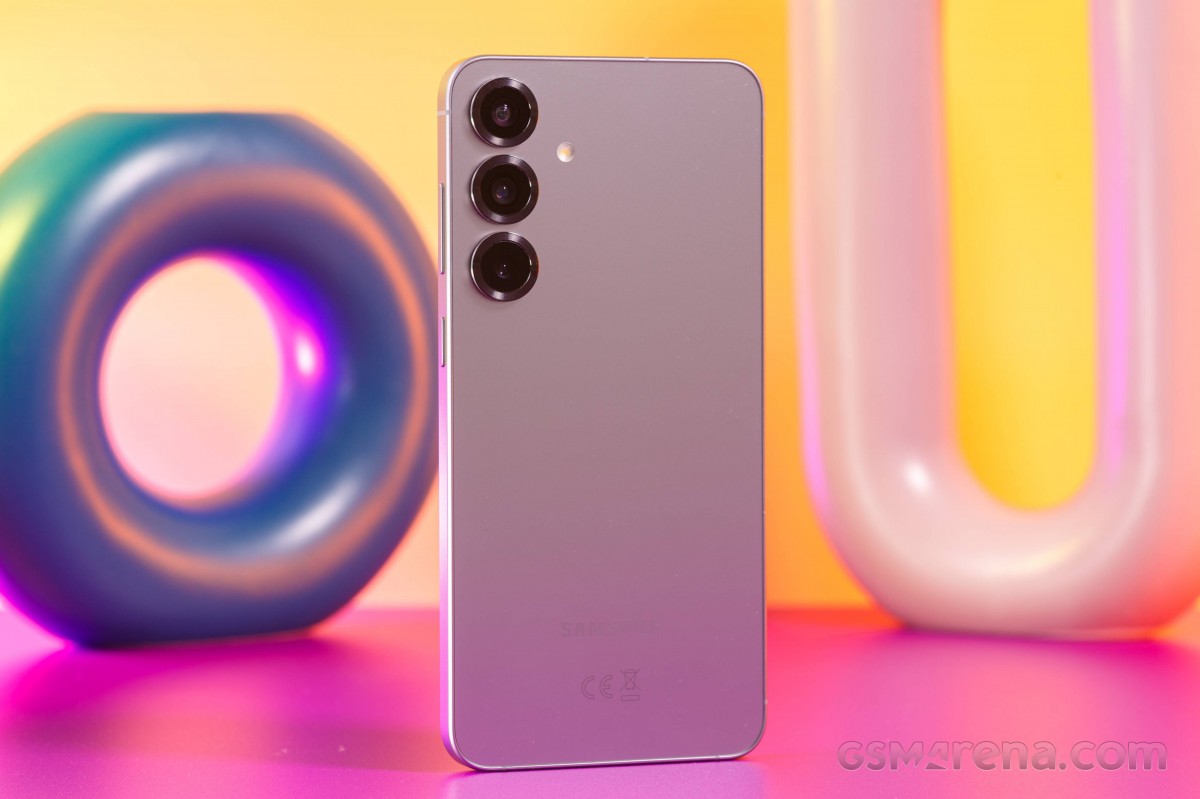
The Galaxy S25+ strikes the perfect balance between the large Ultra and the compact S25, both in features and design. It still feels lightweight and thin; it fits great in your hand, but the larger screen allows for a more immersive multimedia experience. It is a solid phone with a timeless design that deserves appreciation.
Display
The Galaxy S25+ employs the same display we saw on the Galaxy S24+ - a 6.7-inch Dynamic AMOLED 2X panel with 1,440 x 3,120 pixels, up to 120Hz refresh rate, and HDR10+ support.
The screen has a small perforation for the selfie camera and is protected with a Gorilla Glass Victus 2 sheet.
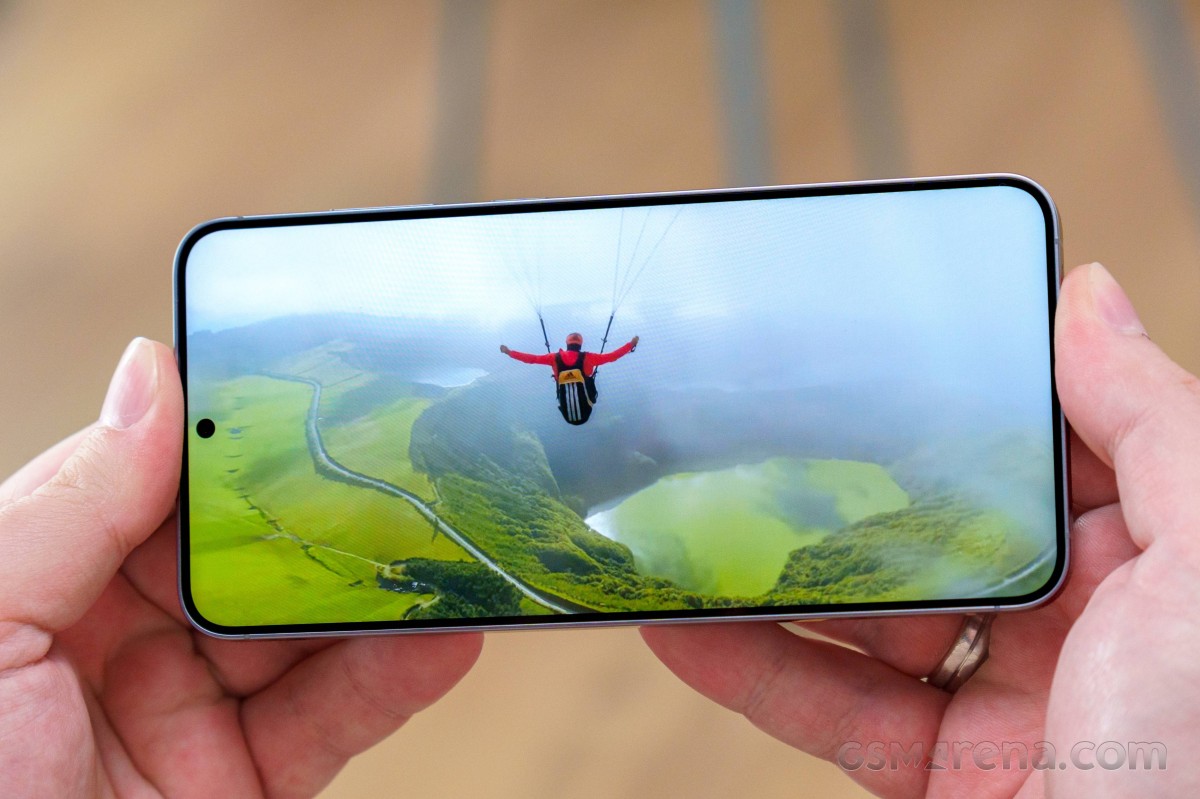
According to Samsung, the maximum peak brightness is also unchanged since last year - 2,600 nits.
Our display measurements show that little has changed since the Galaxy S24+, quite expectedly. The maximum brightness when controlling it manually was 442 nits without boost and 765 nits with the extra brightness boost. This is in the same ballpark as the Galaxy S24+ and Galaxy S23+ screens.
The maximum automatic brightness we captured on the Galaxy S25+ was 1,449 nits, about the same as on the Galaxy S24+ and higher than the Galaxy S23+.
The minimum brightness at point white was just 1 nit.
Max display brightness test
White test pattern, 75% fill (nits)
- Manual mode
- Auto mode
 vivo X200 Pro
 iPhone 16 Plus
 iPhone 16 Pro Max
 Motorola Edge 50 Ultra
 Galaxy S24+
 Galaxy S25+
 Galaxy S25 Ultra
 Galaxy S25
 Xiaomi 14 Ultra
 Xiaomi 14T Pro
The Galaxy S25+ offers two refresh rate modes - Adaptive and Standard. Do not let these descriptions fool you, as, in fact, both modes are adaptive and will continuously switch refresh rates, but only the Adaptive one will max out at 120Hz, while Standard is limited to 60Hz. Adaptive will also work at 120Hz in compatible games.
The Adaptive mode is also, well, more adaptive, by trying to better match Hz to the fps of the currently playing videos, while Standard will just fix the refresh rate at either 30Hz or 60Hz for most of the videos.
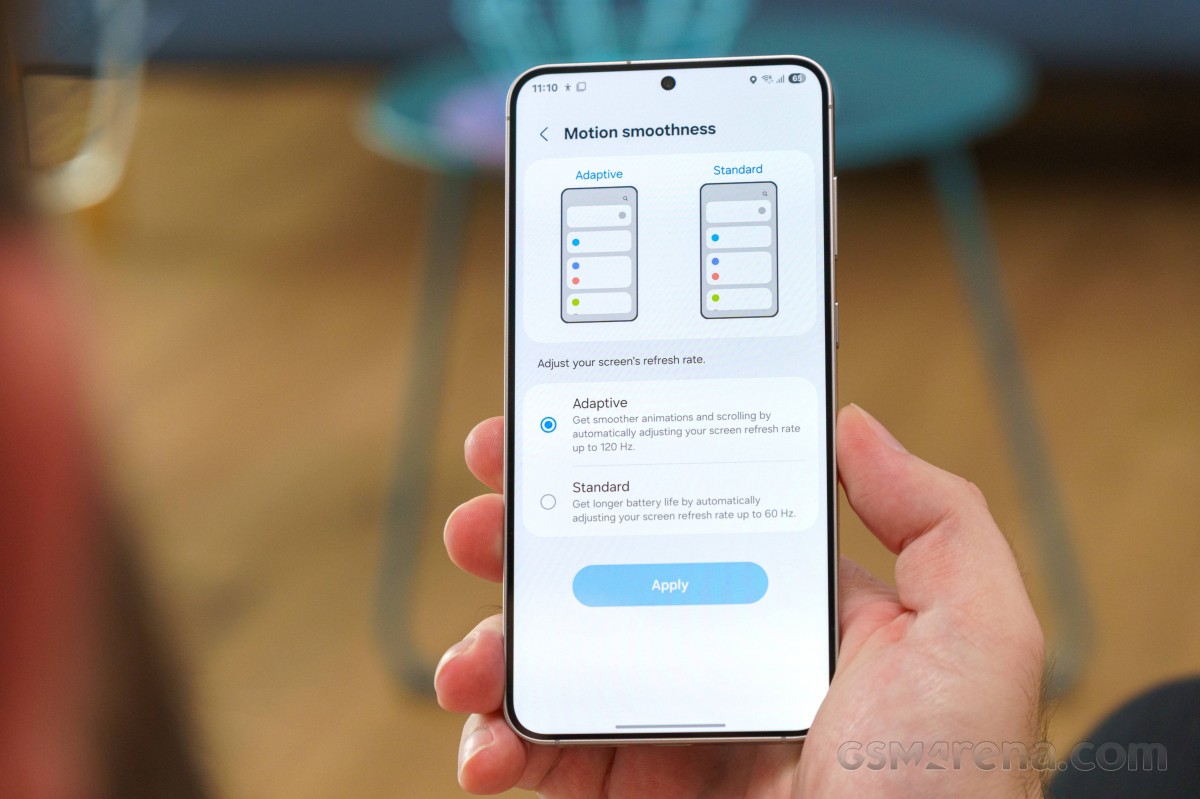
The screen will drop to the minimum of 1Hz for static content, regardless of the mode.
Finally, the small Galaxy S25+ supports HDR10 and HDR10+ - no Dolby Vision video here, as usual. YouTube served us HDR streams and so did Netflix, in FullHD too thanks to the Widevine L1 compliance.
The Galaxy S25+ also supports the Android Ultra HDR standard and will boost highlights for metadata-enhanced photos taken on it, or on other standard-abiding handsets. It works in the in-house Gallery, as well as Google Photos and Chrome.
Battery life
The Galaxy S25+ has a 4,900 mAh battery, just like the S24+ before it.
In our testing, the S25+ offered a nice little battery life bump over its predecessor. We got a small improvement in our call test and a bigger improvement in our gaming test (possibly courtesy of the Snapdragon 8 Elite). The web browsing and video streaming numbers are similar to what we had on the S24+. Overall, the S25+ got a solid Active Use Score of 14:26 hours.
Update, 09 Feb: Following further retesting, the web browsing/socials result has been adjusted to a higher figure, and the gaming result has been adjusted to a lower figure after the review publishing. We've updated the Active Use score below to reflect the new results.
Our new Active Use Score is an estimate of how long the battery will last if you use the device with a mix of all four test activities. You can adjust the calculation based on your usage pattern using the sliders below. You can read about our current battery life testing procedure here. For a comprehensive list of all tested devices so far, head this way.

 Samsung
Galaxy S25+
4900 mAh
AppleiPhone 16 Plus
4674 mAh
SamsungGalaxy S24+
4900 mAh
vivoX200 Pro
6000 mAh
Xiaomi14 Ultra
5000 mAh
Charging speed
The Galaxy S25+ supports 45W fast wired charging, or as Samsung likes to call it, Fast Charging 2.0.
The phone also supports 15W wireless and reverse wireless charging. Samsung has updated the wireless charging to be Qi 2.1 Ready, which means you get support for magnetic wireless charging accessories, but there are no magnets inside the phone (hence the Ready moniker), so to use the feature, you need a case that has magnets built-in.
Of course, the S25+ ships without a charger, or if you get a bonus one from your retailer, it will be the 25W power adapter, which will still get the job done, but not in the fastest possible time.
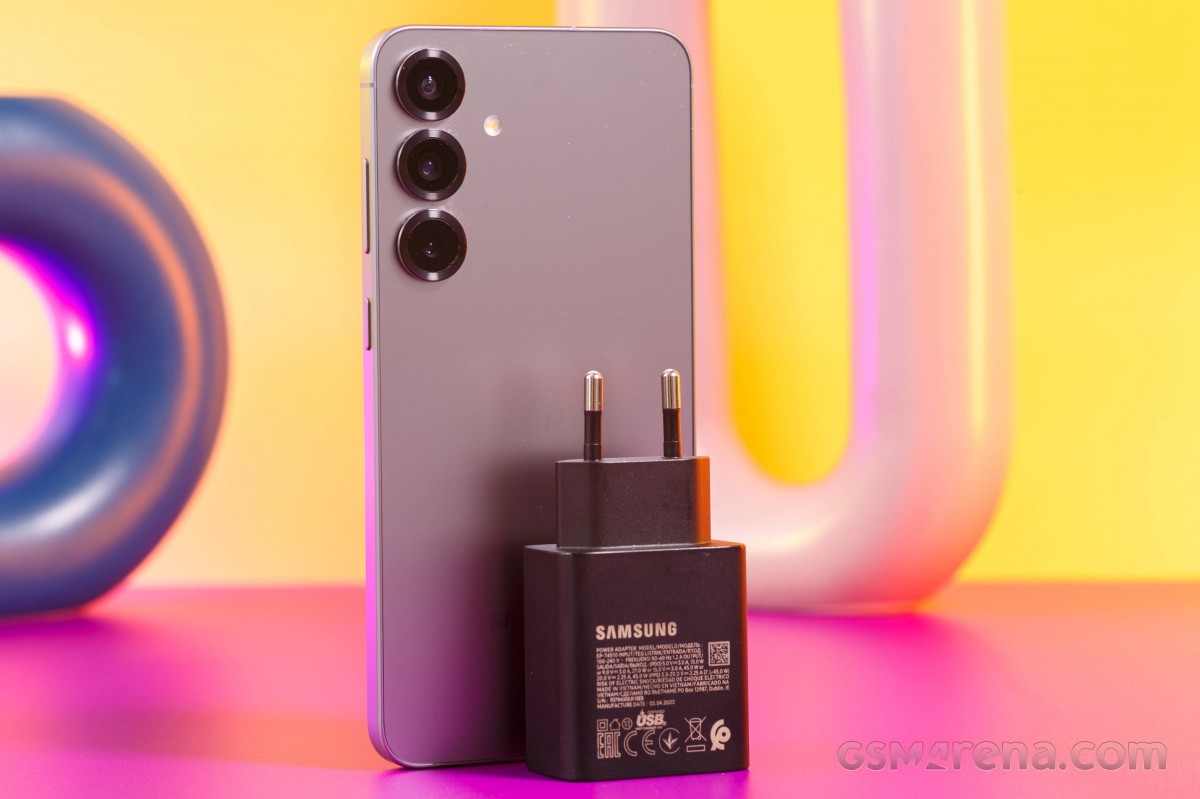
Update, 09 Feb: With further testing, we found out that Galaxy S25+ no longer requires a 5A cable/charger to reach its max charging power. The 3A cable that arrives in the box gave us a peak of 39W (13V/3A) when paired with the 45W Samsung charger, which means it can use higher voltage but lower amperes to achieve the same charging power. This mode of charging is not possible with the S24+, which requires a 5A cable and a 5A charger to reach its peak charging power of 42W (9V/4.6A). What's great about this change is that now you can enjoy the fastest possible charging speeds on the S25+ with the cable in the box and any USB-PD/PPS charger you may have that's only capable of outputting 3-3.25A max (like many chargers rated at 65W). You can also still use a 5A cable/charger combo if you have one to much the same effect, but this widens your fast charging options considerably.
We used Samsung's 45W power adapter with its bundled 5A-rated cable for our test result below. We recorded 42% of charge in 15 minutes, 75% in 30 minutes and 100% in 58 minutes. Overall, just like most other recent Samsung flagships, the S25+ charges fully in about an hour.
Charging speed
- in 15 min
- in 30 min
- Time to full charge (from 0%)
Motorola Edge 50 UltraXiaomi 14T Pro OnePlus 13Xiaomi 14 UltraGalaxy S25+Galaxy S24+
 OnePlus 13R
On the plus side, slower charging may be easier on the battery longevity in the long run. Additionally, Samsung offers a few Battery Protection options if you feel that extra care is needed. You can choose between Basic (stops at 100% and starts again after a 5% drop); Adaptive (adjusts by your charging and sleep patterns); or Maximum (you can choose a custom limit 80%/85%/90%/95%).
Speakers - loudness and quality
The Galaxy S25+ has stereo speakers of the hybrid variety - meaning there is one speaker at the bottom of the phone, and the earpiece acts as a second one. Just like any other hybrid pair, the earpiece is quieter and focuses mostly on high and mid-tones, while the bottom full-blown speaker has bass and good vocals.
The Galaxy S25+ also supports Dolby Atmos with Movie, Music, Voice and Auto presets. There is also a specific Dolby Atmos for Games option.
The S25+ seems to feature a speaker system with a tuning similar to the S24+. It also managed to get a very good score in our testing. The audio quality is very good, too - the vocals are great, and the high frequencies are well presented, but the bass is barely there.
Android 15 plus One UI 7
The Galaxy S25+ boots Android 15 with One UI 7. Samsung promises seven years of software support that includes both major Android updates and security patches.
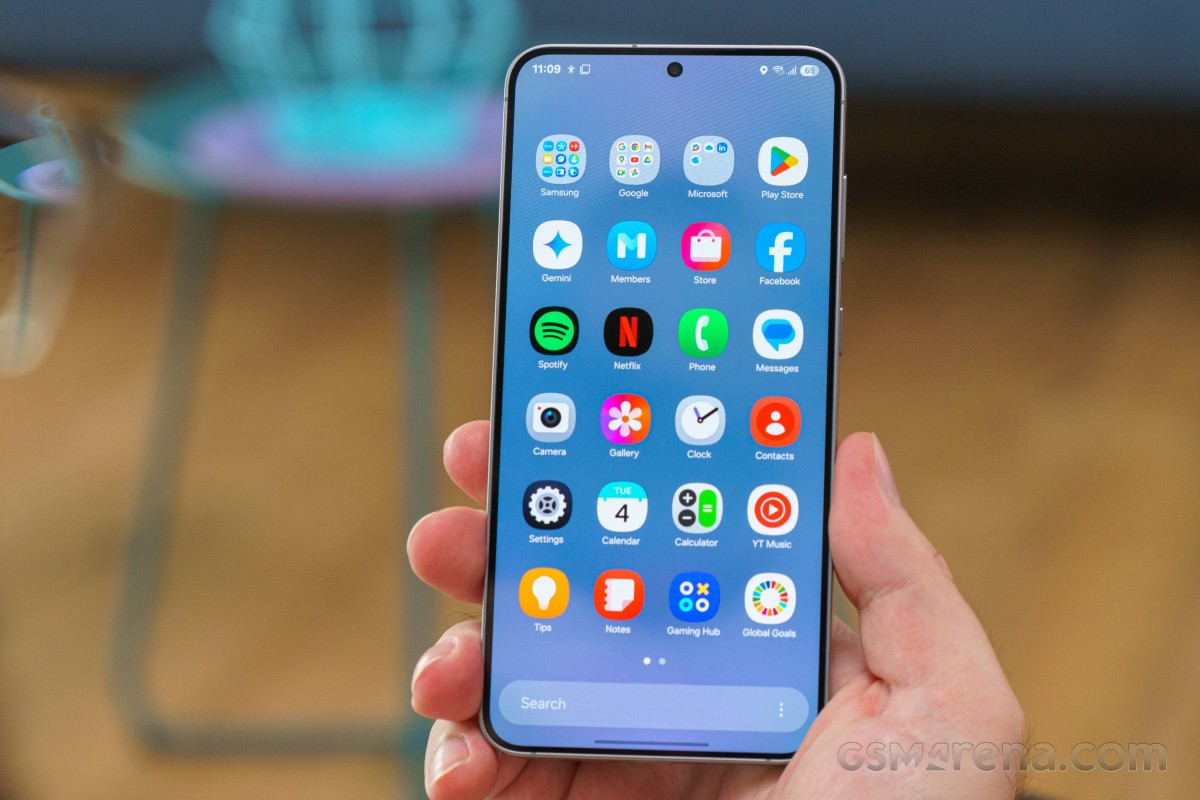
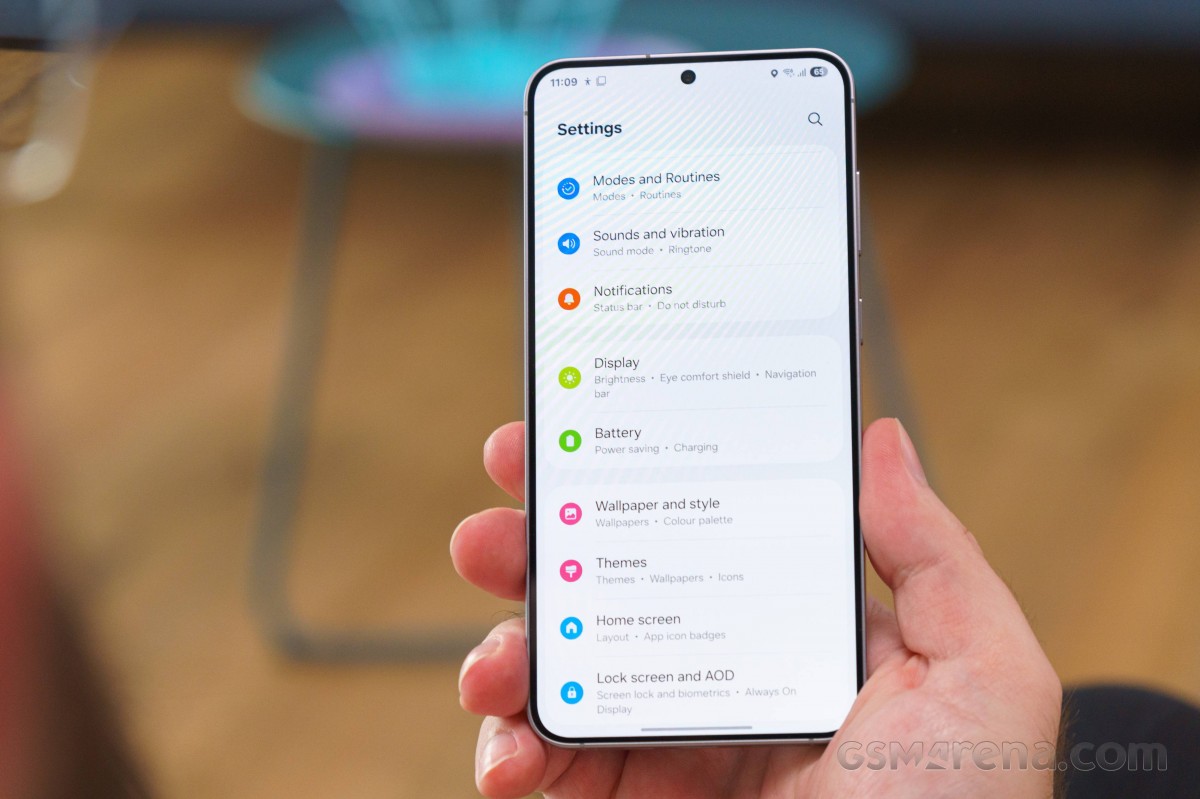
One UI 7 looks a lot like One UI 6 with its signature icons, widgets and wallpapers. The operational logic hasn't changed much - you still rely on your homescreens, app drawer, gestures or button navigation, and the drop-down area.
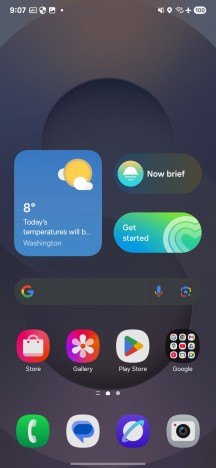
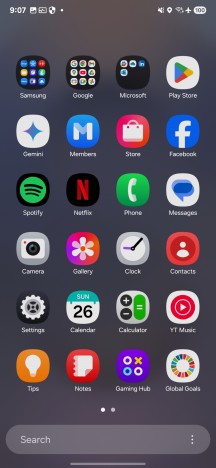
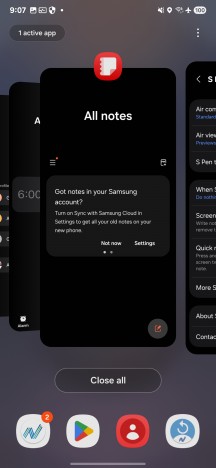
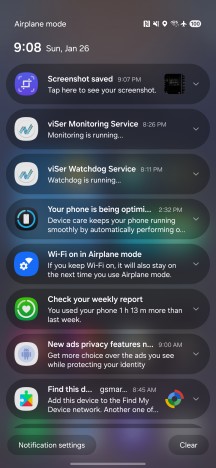
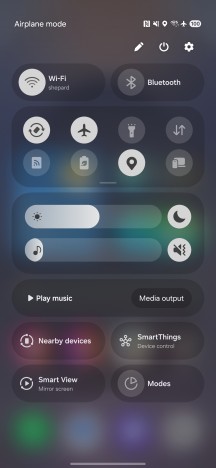
Android 15 and One UI 7
One UI 7 has split the notification and quick toggles into two separate panes, like on the iPhones. Now you drop the notification page from the top left corner of the screen, and the expanded quick toggles page from the right corner of the screen. That said, you still get the option to revert to a common interface showing both your quick settings and notifications.
Samsung provides a few custom apps like Gallery, My Files, Internet, Health, Calculator, Calendar, Wallet, the powerful Notes app, and its own Bixby assistant.
The entire Google suite is also pre-installed, plus a few Microsoft apps - Office, OneDrive, Outlook, LinkedIn.
Google Gemini is at the heart of AI, as usual. You can ask Gemini a lot of stuff to do, even make entire conversations with the Live feature.


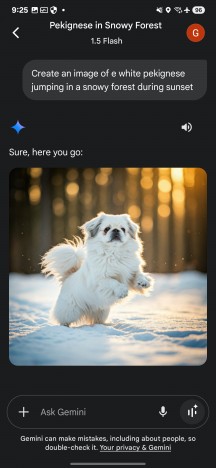
Gemini
Perhaps the most significant new addition is system-wide support for natural language input, enabling features like AI Agents, AI Summary, additional Circle to search functionality, Gallery control and Cross-app Actions.
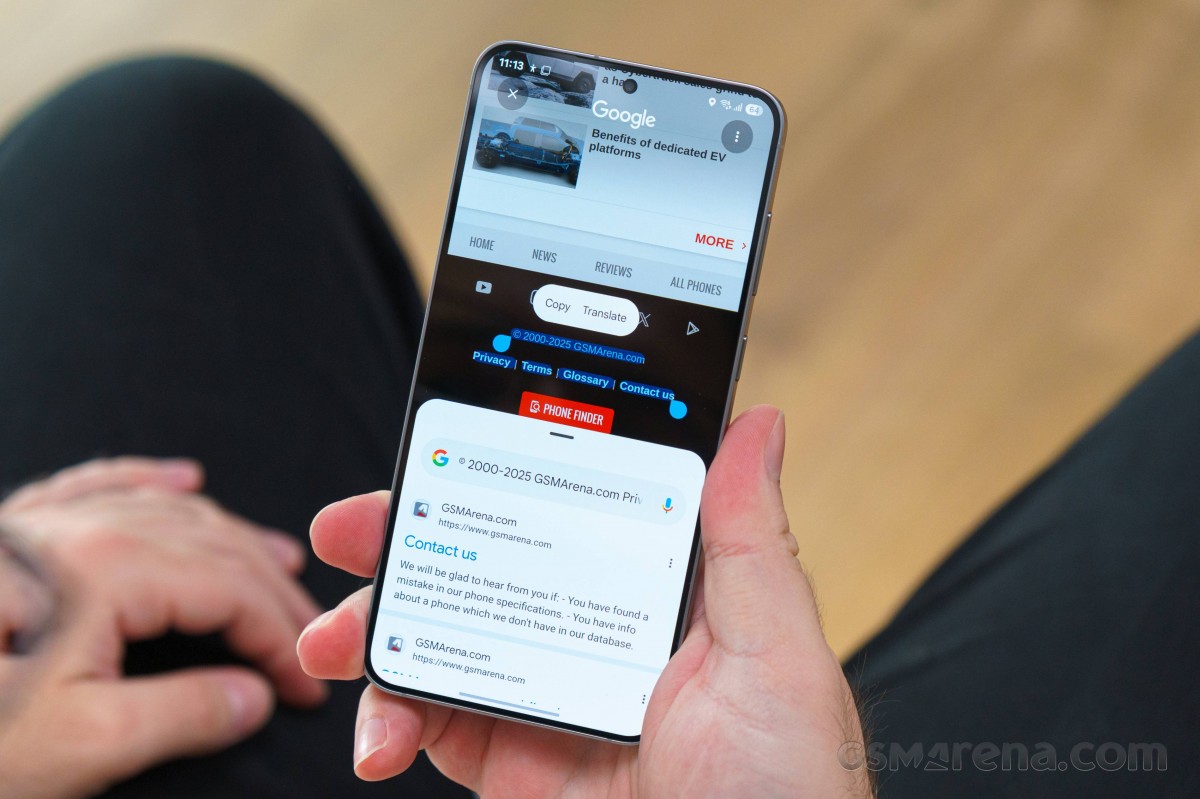
AI Summarize is a cool feature - the AI can analyze the screen's content in more detail and offer a short summary of the page.
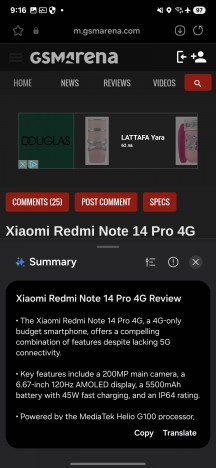
AI Summary
Google recently updated Circle to search, so now it analyzes not just the screen contents as an image but can also listen to the audio that's currently playing and ID the music track.
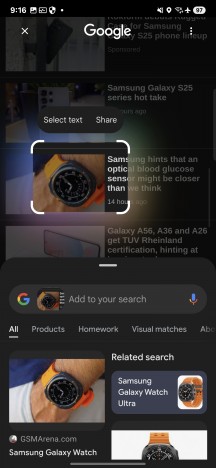
Circle to Search
The natural language input allows you to control your phone in various ways. For instance, you can voice search your Gallery and ask the AI assistant to pull out photos from your trip to a particular place.
You can even go to Settings and ask it to enlarge the font if it's too small, although this is limited to system menus only.
The Cross-app Action is arguably the most exciting feature. You can ask the AI to fetch information online and store it in Notes or create a Calendar event with the info. Or even send it as a message to one of your contacts. And you can do all of that with a single prompt.
This is quite impressive as the system is now seemingly capable of more complex tasks involving changing system settings and interacting with multiple apps, and all of that works with natural language input.
For now, the feature is available only with Samsung One UI system apps and Google apps, but Samsung promises to introduce support for third-party apps, including WhatsApp and Spotify to name a few.
The Gallery Generative Edit is quite powerful - it can add or remove people and objects, with their shadows, of course. It also allows you to sketch some things and add them to your photo.
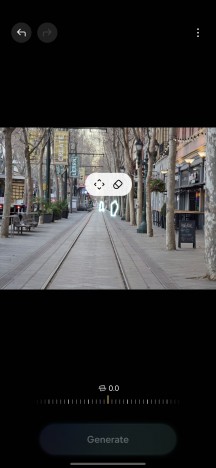
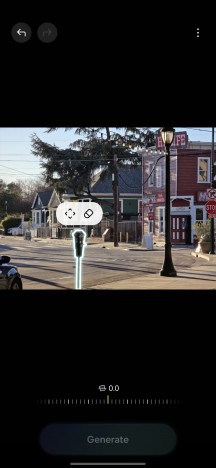



Generative Edits in Gallery
Some personalized AI features are also at hand, such as Now Brief and Now Bar. Now Brief offers a summary of your daily schedule - for example, in the morning, it will summarize your last night's sleep, give you a quick brief look at your daily appointments and even let you know whether your favorite podcasters or artists have released new content. It will also come up at noon and in the evening to help you stay on top of things.
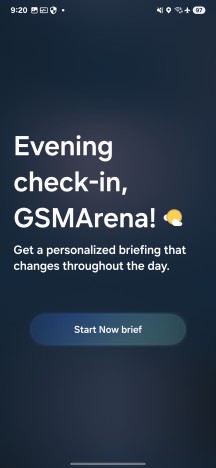
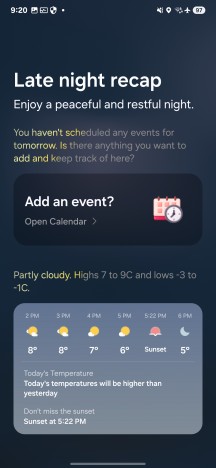
Now Brief
The Now Bar has a similar concept, except that it lives on your lockscreen and focuses on current apps and events. It will provide contextual information like what song you are playing, turn-by-turn directions from Google Maps with a suggested departure time so you are not late for your meeting, and even keep up to date with live score updates on your favorite sports team.
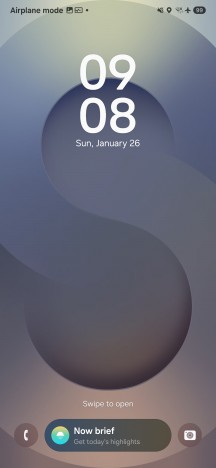
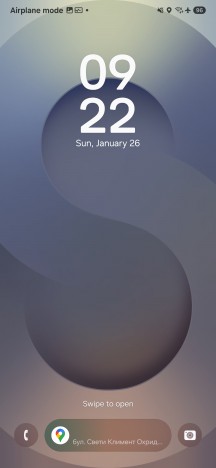
Now Bar
Samsung's DeX functionality is still part of One UI 7. You can connect a monitor, wired or wirelessly, to your Galaxy, and expand its Android capabilities in a desktop-like interface with windows and everything. The PC support for DeX is gone now, and Samsung suggests the Galaxy users should use the updated Link to Windows app by Microsoft instead. The app offers the same features as the PC DeX, for seamless PC-to-phone and vice versa transfers.
The Galaxy S25 software feels new and refreshing in a tangible way. However, most of that comes thanks to the visual overhaul that One UI 7 brings and this one is bound to trickle down to the Galaxy S24 as well. The all-important animation snappiness and fluidity are at a level above the others, and the interface looks very good.
There are subtle new UI sounds that give the software a physical presence. Samsung took its time with this release and it shows. We're still kind of sour that the vertically scrolling app drawer didn't happen. At this point, only Samsung phones lack the feature.
Performance and benchmarks
The Galaxy S25+ is powered by the 3nm Snapdragon 8 Elite chipset, the most powerful SoC any Android phone can enjoy right now. It's a "Snapdragon 8 Elite for Galaxy", meaning the two prime CPU cores are clocked higher (4.47 GHz vs. 4.32 GHz), and the Adreno GPU runs at higher clock speeds.
The Elite chip uses Oryon processor cores, two versions of them - two Prime cores and six Performance cores. These aren't Cortex cores like in MediaTek and Samsung Exynos chipsets, but a custom Qualcomm design. The two Prime cores run at up to 4.47GHz, while the Performance cores are clocked at 3.53GHz.
Then there's the Adreno 830, which is built on a new architecture using a sliced design with dedicated memory for each slice. The 830 has three of these slices clocked at up to 1.2GHz.
The Galaxy S25+ is available with 256GB (as reviewed) and 512GB UFS 4.0 storage, while the RAM is always the same - 12GB LPDDR5X.
The Galaxy S25+ scores chart-topping results across the board. The Elite processor is the fastest Android CPU to date, scoring at least 30% higher than the Snapdragon 8 Gen 3, and between 20% and 30% more than the Dimensity 9300 and Dimensity 9400 CPUs.
The Adreno 830 inside the Snapdragon 8 Elite is also the best scoring GPU on the Android market right now. It is 30% more powerful than the Adreno 750 inside the Snapdragon 8 Gen 3, and about 10% better than the Immortalis-G925 inside the Dimensity 9400 chip.
The AI performance of the Elite chip is currently unmatched as well.
GeekBench 6
- Multi-core
- Single-core
Galaxy S25Galaxy S25+OnePlus 13vivo X200 Pro vivo X200Xiaomi 14T Pro
 Galaxy S24 UltraGalaxy S24+
 Xiaomi 14OnePlus 13R
AnTuTu 10
OnePlus 13vivo X200vivo X200 ProGalaxy S25Galaxy S25+OnePlus 13RXiaomi 14T ProXiaomi 14Galaxy S24 UltraGalaxy S24+3DMark
- Wild Life Extreme (2160p)
- Solar Bay (1440p)
Galaxy S25OnePlus 13Galaxy S25+vivo X200vivo X200 ProGalaxy S24 UltraOnePlus 13RXiaomi 14Galaxy S24+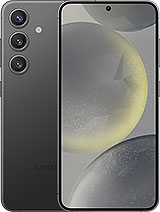 Galaxy S24
The Galaxy S25+ and its boosted Snapdragon 8 Elite demonstrate excellent performance capabilities by delivering chart-topping results in our CPU and GPU tests, even though the Antutu result doesn't exactly excite.
The sustained performance is similar to the previous generation of Galaxies - there is 41% CPU and 52% GPU performance drop. The phone gets warm under continuous stress testing, but never hot.
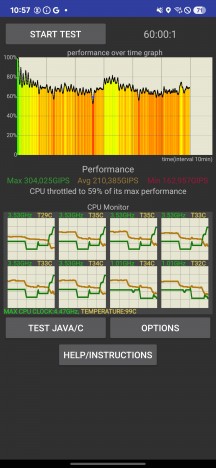
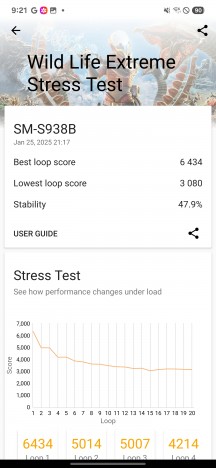
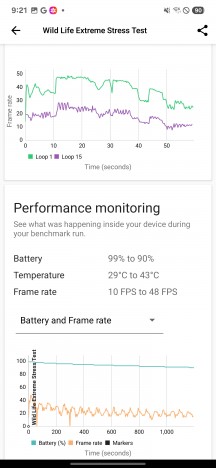
CPU test • GPU test
The Galaxy S25 may have the best Android chipset, but the sustained performance isn't ideal - the situation is similar to a few other flagships, but it seems to be a little worse here.
Connectivity
The Galaxy S25 and 25+ are dual-SIM 5G devices. They can do concurrent SA and NSA Sub-6 on two SIM cards. Depending on the market, you probably won't get to choose your actual physical SIM configuration. Most regions seem to get two physical Nano-SIM slots and an option to attach an eSIM card through software.
The S25 and S25+ still lack satellite connectivity as far as most practical purposes are concerned. There is technically some support. You can read more about it here.
There is no microSD card slot on the SIM tray.
For local connectivity, the S25 and S25+ finally get Wi-Fi 7. It is a tri-band Wi-Fi 7 as well, which means you get to benefit from the fresh new 6GHz band.
Bluetooth is version 5.4 with LE support. You get NFC on board, but there is no FM radio or IR blaster.
We also tested the capabilities of the USB ports on the phones. Both the S25 and S25+ have Host/OTG support. Also, both of their ports offer Display Port 1.2 over USB Alt mode. Regarding data transfer, the Type-C ports are backed up by a USB 3.2 Gen 1 connection, which tops out at 5 Gbps transfer speeds - not too shabby at all for a smartphone.
The Samsung Galaxy S25 and S25+ have a pretty long list of on-board sensors. There is an STM LSM6DS accelerometer and gyroscope combo, an amsAG TMD4914 light sensor, an AK0991x_0 magnetometer and compass, and a BOSCH BMP5 barometer.
The proximity sensor situation hasn't changed since last year and is still a bit disappointing. You still get a virtual proximity sensor - Samsung Palm Proximity Sensor V2. It works quite reliably to turn off the display while in calls. Technically, there does seem to be an actual hardware proximity sensor inside the phone, but it appears to be inaccessible to any third-party app. The dialer has access to the sensor, but that's about it. These Samsung proximity oddities aren't new, however, and seem to date back at least to the S23 generation, where every phone, including the Ultra, is equipped with the same Samsung Palm Proximity Sensor V2 sensor tech.
A familiar triple camera setup
The Galaxy S25 and S25+'s camera hardware appears unchanged and comes straight from last year's S24 and S24+. That's both a good and a bad thing since this particular rear camera setup has proven itself to be quite reliable and full-featured, even if a bit underwhelming by today's flagship standards.
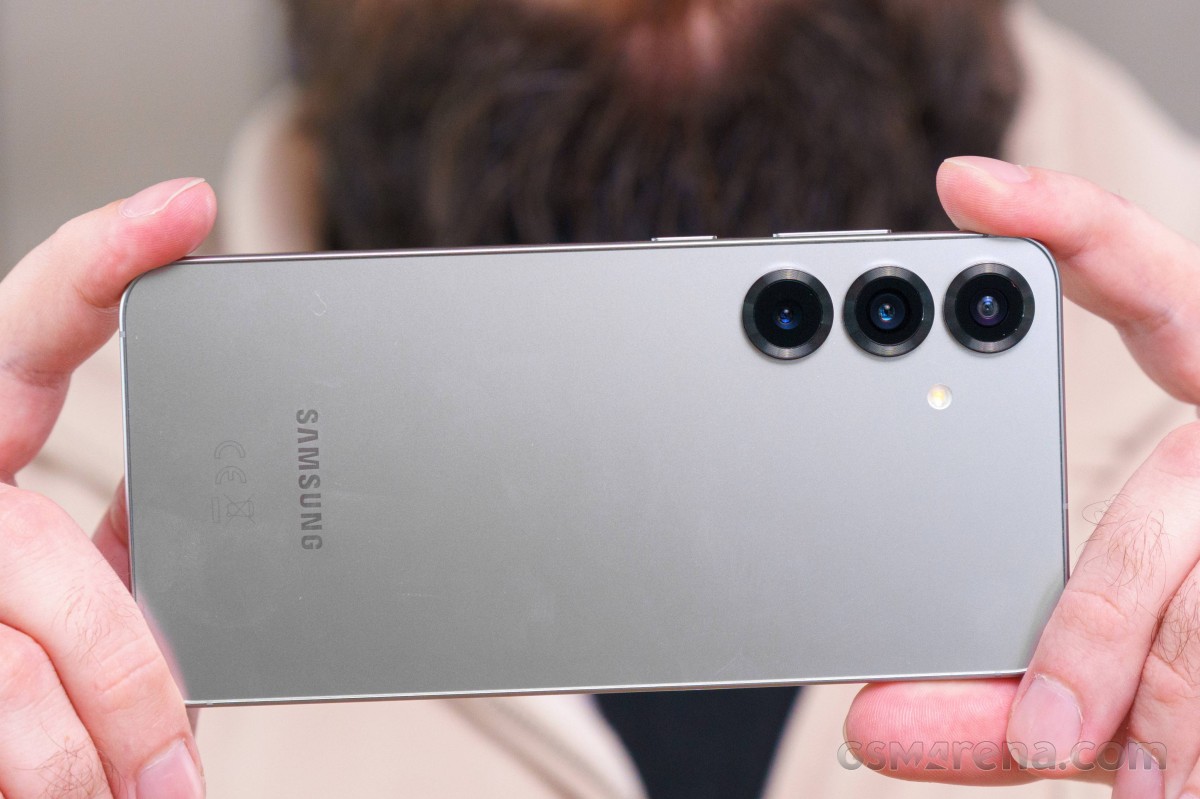
It's worth pointing out that Samsung is continually refusing to fit an ultrawide camera with autofocusing capability on anything but the Ultra model, which we consider unacceptable at this price point.
On a more positive note, the selfie camera remains a highlight here with autofocus and better-than-average overall quality.
- Wide (main): 50MP Samsung ISOCELL (S5K)GN3, 1/1.56", 1.0µm, f/1.8, 24mm, dual pixel AF, OIS; 4320p@30fps, 2160p@60fps
- Telephoto: 10MP Samsung ISOCELL (S5K)3K1, 1/3.94", 1.0µm, f/2.4,67mm, AF, OIS; 2160p@60fps
- Ultrawide: 12MP Sony IMX564, 1/2.55", 1.4µm, f/2.2, 13mm, fixed focus; 2160p@60fps
- Front camera: 12MP Samsung S5K3LU, 1/3.2", 1.12µm, f/2.2, 26mm, PDAF; 2160p@60fps
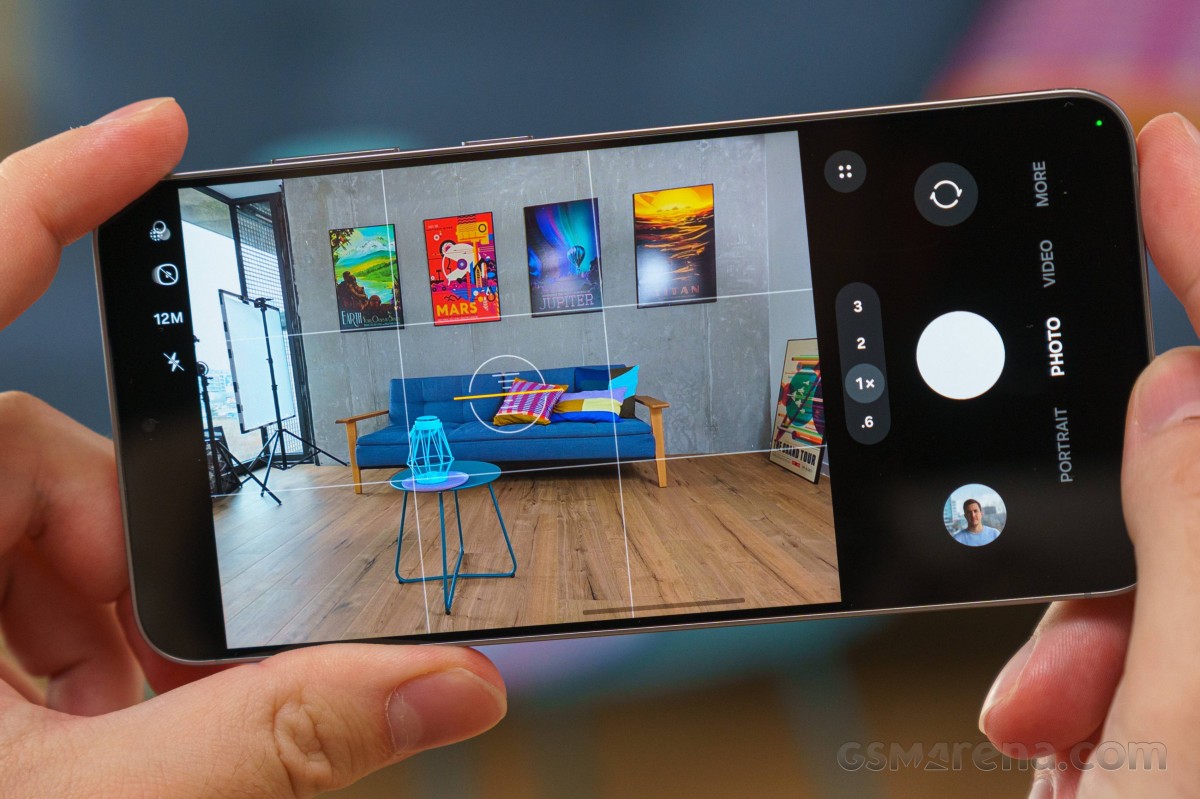
Samsung has revamped the camera app with OneUI 7. The mode carousel is now placed under the shutter button instead of above and when you open the extra modes, they no longer hide your viewfinder. Pro mode options have been redesigned to keep the controls out of the way too.
Daylight photo quality
Main camera
The main camera produces clean 12MP stills with a good amount of detail, wide dynamic range and punchy, yet not over-the-top colors. The image quality is just like last year.
This also means the photos leave a bit more to be desired in terms of sharpness. They are not very optically sharp and when you shoot inside, they get even softer. We may have praised these photos 2-3 years ago, but the industry is moving at a rapid pace, and this sort of fine detail rendition is no longer class-leading.
Contrast is generally good, but sometimes photos can look a bit flat with more challenging lighting conditions, say when you have a backlit scene.
Sharpening has been toned down from the previous generation, but it's still visible here and there.
You can force the main camera to capture in its full 50MP resolution, and the results are interesting. Sure, they are flat and look even softer without the extra processing (look at that mushy grass), but some parts of the image look better (the tiles on the facades).
The 2x crop zoom photos are more than decent. Sure, you get a bit more grain, and stills are generally softer than their 1x counterparts, but Samsung achieved lossless-like quality.
3x zoom camera
The 3x telephoto photos are fairly decent but definitely not a standout feature of the phone. The 3x telephoto unit matches the main camera's processing in terms of colors, contrast, color temperature, etc.
Detail is solid, perhaps better than you'd expect, given the 10MP to 12MP upscale action. The grain is there in the shadows if you go looking for it, but it's not getting in the way. Dynamic range and colors are great.
Portrait mode
There are portrait toggles at 1x, 2x and 3x zoom levels, so there is plenty of versatility to play around with.
The Portrait mode shots are quite alright in terms of subject separation and bokeh rendition; however, the definition of the facial features is softer than in the regular photos. The difference is especially prominent with the 3x camera, which produces outright soft faces.
Ultrawide camera
We are glad to report that we had none of the S25 lens misalignment on our Galaxy S25+ unit. Even so, the photos by the ultrawide camera are not terribly sharp.
On the positive side, the dynamic range is surprisingly wide for this type of camera. The contrast is also solid. The colors are very well-matched to the other cameras.
Selfies
As we said, the S25+ borrows its selfie camera from the S24 generation, and it, in turn, gets its hardware from the S23. However, that's not a reason to complain. Quite the contrary. The subject is always well-exposed, with natural skin tone, excellent colors, wide dynamic range and plenty of detail to go around.
Low-light photo quality
Like many other phones, the S25+ has automatic night mode and a dedicated mode in the camera app. The automatic night mode does a pretty good job on its own, but it is a bit lax, and you can get a bit different results by using the manual night mode.
Main camera
The regular nighttime photos have a laidback processing and good highlight retention but not very bright shadows. There is plenty of noise too. The color rendition is nice.
While this approach might not be universally appreciated, we think it's a very mature way of handling low-light photography, even if it's not necessarily our cup of tea.




Samsung Galaxy S25+: 12MP main camera low-light samples
Forcing the Night mode produces much more likable results by clearing up the noise and boosting sharpness and contrast. In certain scenes, you can get dramatically improved results with the Night mode Forced On, so we suggest using it despite the aggressive microcontrast increase.
With the 2x photos, rendition is largely comparable to that of the standard 1x, but expect a slight drop in sharpness and a further increase in noise. Opting for the dedicated Night mode is once again advisable as it boosts colors, clears up the noise and adds micro-contrast.
3x zoom camera
The low-light photos from the dedicated 3x telephoto are much better. You get plenty of detail and great colors.
Again, if you want less noise and sharper lines, be sure to go with the dedicated night mode.
Ultrawide camera
The ultrawide camera looks good in low light (for this sort of camera). The dynamic range is on point, and the overall processing seems to match the main camera's.
Again, you can get more aggressive processing via manual night mode, but that comes at the expense of the absolute sharpness so we can't exactly say that one approach is better than the other.
Video capture quality
All four cameras on the Galaxy S25+ can record video at up to 4K60, with the rear main camera also capable of 8K30 recording. The default video codec is h.265 (HEVC), offering you the choice between prioritizing high quality or reducing file size. Alternatively, you can select the older, less efficient h.264 codec.
Every camera mode includes video stabilization, which you can disable in settings if you prefer another method for maintaining stability and prioritizing the field of view.
The HDR video recording has been upgraded to 10-bit HDR video (up from 8-bit last year). There is also a new Galaxy Log video mode where you intend to do the color grading of the footage later yourself.
Another video-related feature in OneUI is the new AI audio eraser in the Gallery, which allows you to adjust the volume of certain type of sounds in your videos after they’ve been taken - you get a choice of speech, music, wind, nature, crowd and noise.
It comes as no surprise that the main camera captures excellent 4K videos. These are sharp and detailed, with a wide dynamic range and pleasant colors. It holds up to the flagship standard with ease.
At 2x digital zoom, video quality remains great and it seems Samsung has nailed the 'lossless' part.
The 3x telephoto camera produces detailed and sharp videos, with good dynamic range and great colors. They are also very well matched to the main camera's.
The above is valid for the 4K videos from the ultrawide. They are very good (for this sort of camera), colors look nice and are well-matched to the other two cameras.
The main camera remains very competent in low light, even though we have seen better performance from competitors lately. Still, these clips have plenty of detail: good colors, low noise and nicely developed shadows. Highlights can be clipped at times, but it's nothing severe.
We are surprised by the 3x telephoto camera as well. Sure, it's a bit grainy, but the level of detail and sharpness are both quite impressive for a small telephoto unit like this one.
Videos from the ultrawide are quite soft and murky. There isn't any obvious noise, which is a good thing, but detail is still lacking. Plus, you get clipped highlights and crushed shadows.
We tried the stabilization with the main camera in 4K mode and are extremely happy with the result. The stabilization is very smooth and probably one of the best around.
The competition
The Galaxy S25+ comes in two storage variants. Both have 12GB of RAM. The base tier is 256GB, while the higher one is 512GB. The official MSRP for the base variant is $1,000/€1,170/£1,000, and you can get the upgraded storage for $1,120/€1,290/£1,100.
You could get slightly better deals from certain retailers and some potential accessory bundles, but generally, these are the launch prices. That's a pretty penny to pay for a smartphone, and there are certainly some interesting alternative options to consider.
 Samsung Galaxy S25 • Samsung Galaxy S25+
While the Galaxy S25+ is truly a great all-around flagship, why not consider last year's Galaxy S24 Ultra and get almost the same experience? You'd be getting a larger, anti-reflective display, nice speakers, solid battery life and better camera hardware.
Samsung Galaxy S24 Ultra • OnePlus 13 • vivo X200 Pro
The OnePlus 13 is an all-around excellent device. It has a really impressive build with IP69 certification in some regions. Its display is also very impressive. You get the latest and greatest Snapdragon 8 Elite chipset, plenty of storage and RAM, a good stereo speaker system, fast charging on a large 6,000 mAh battery and a potent triple camera setup on the rear.
 Samsung Galaxy S25 • Samsung Galaxy S25+
While there are plenty of other phones to consider, we would like to bring forth the vivo X200 Pro for our final spotlight choice, knowing full well that it won't be easy or convenient to acquire on many markets. If cameras are your primary concern and you are in the right market, it's hard to go wrong with the vivo X200 Pro. It, too, has a great display and excellent ingress protection. There is a large battery onboard this phone as well, and it has good battery life. Its camera system is arguably the biggest highlight, though.
Our verdict
Last year, a big update was made to the Galaxy S Plus model. The S24+ got back its QHD+ resolution and 12GB of RAM and was also included as part of Samsung's impressive seven-year software support promise. You still get all of that this year, but arguably, you don't get nearly as big of an upgrade.
The S25+ has a slightly more refined design, a new Snapdragon 8 Elite chipset, and better connectivity, such as Wi-Fi 7 and Bluetooth 5.4 support. And, you no longer have to fret about getting an Exynos or a Qualcomm chip.
And that's about it, unfortunately. The rest of the hardware is pretty much carried over from the Galaxy S24+. Not that we're outright complaining, but certain aspects could have seen an upgrade, like the display color depth, which is still 8 bits, despite Samsung being such a huge and market-leading display manufacturer. The ultrawide camera still lacks autofocus and we don't get the anti-reflective Gorilla Armor glass - a couple of features only available on the Ultra.
Traditionally, the Plus model is the least popular out of the Galaxy S family (at least according to our statistics), and that makes sense. We don't expect things to change any time soon. The Plus model just sits in an awkward space, where it has to be more expensive than the small vanilla model, but it is not that cheaper than the Ultra while coming with certain concessions. Still, if both Samsung and Apple deem it necessary to keep Plus models around, then there must be enough market interest. Don't get us wrong, the Galaxy S25+ is an excellent and well-rounded device that does not disappoint in any obvious way. Most of our "complaints" come down to expectations, missed opportunities and wishful thinking, so to speak. Ultimately, snatch one up if you find a good deal for the S25+. Otherwise, it is worth shopping around.
Pros
- Refined design, light and very comfortable to use.
- Pretty great 120Hz, LTPO, QHD+ OLED display.
- Better battery life than last year's model.
- Awesome stereo speakers.
- Top-notch performance.
- Solid photo and video quality across the board.
- Seven major OS updates.
- Fast charging no longer requires a 5A cable/charger so you have more options.
Cons
- Generational upgrades are few and far between.
- No charger in the box, slowish charging too.
- The anti-reflective Gorilla Armor glass is reserved for the S25 Ultra for yet another year.
- Still no autofocus on the ultrawide camera.


0 Comments